
Hardware
No cluster. Two machines you could buy today.
Every spec below is read directly off the machines — not marketing numbers. One trains the from-scratch pretrain, the other runs every LoRA fine-tune.
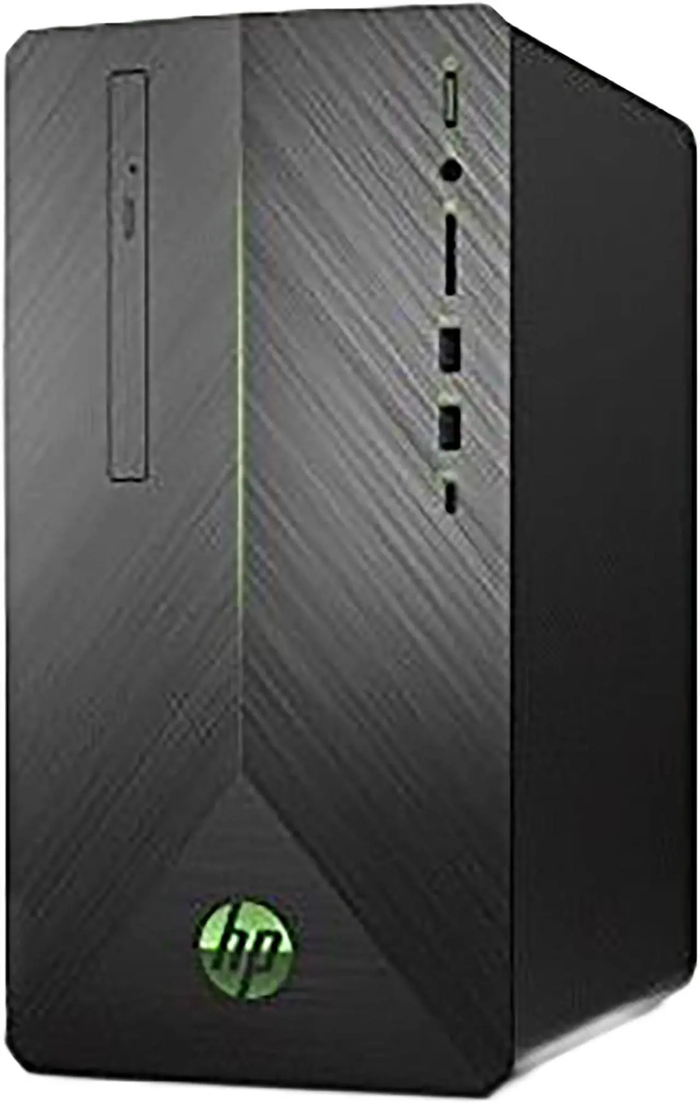
HP
From-scratch pretrain boxHP Pavilion Gaming Desktop 690-0xxx · Windows 10 Home, 64-bit
Official HP product photography (690-series chassis)
CPU
Intel Core i5-9400F
6 cores / 6 threads @ 2.90 GHz
- 9MB L3 cache · 1.5MB L2
- No integrated graphics (the "F" suffix) — GPU handles all display output
- Coffee Lake, LGA1151
GPU
NVIDIA GeForce GTX 1660 Ti
6GB GDDR6 VRAM
- The entire pretrain — a ~1B-parameter MoE — fits and trains here
- 120W power limit, runs the whole job at ~50W
- Driver 595.95
Memory
2× Samsung 8GB DDR4-2666
16GB total, dual-channel
- Part no. M378A1K43CB2-CTD, UDIMM
- 2666 MT/s
- Holds the full token-packed dataset in the OS page cache alongside the training process
Storage
SK hynix BC501
256GB NVMe SSD
- Single system drive — OS, training code, checkpoints, and the pretraining corpus
- ~78GB free at last check

Mac mini
LoRA fine-tuning boxMac mini (Mac16,10) · macOS, Apple Silicon
Official Apple product photography
Chip
Apple M4
10-core CPU — 4 performance + 6 efficiency
- 10-core GPU, Metal 4
- Unified memory architecture — CPU and GPU share the same pool, no separate VRAM to run out of
- Runs every Prism/Amethyst/Copal LoRA fine-tune via MLX
Unified memory
16GB
Shared across CPU + GPU
- No PCIe transfer between "system RAM" and "VRAM" — the model weights live in the same memory the GPU computes on
- Capped per-run (MLX_MEM_GB) so fine-tuning shares headroom with everything else running on the machine
Storage
Apple SSD (AP0256Z)
256GB, solid state
- Datasets, LoRA adapters, and fused MLX/GGUF exports all live here before upload
Wondering what's actually running on them right now? See live training status